
Tag: education
-

Mastering Advocacy: Key Strategies for Effective Policy Influence
The American Planning Association held it’s sixth State Legislative Summit in Des Moines, Iowa this past week. The two-day event began with a morning bootcamp covering strategies and information to successfully lobby and champion good legislation at the state level. By waiting for legislation to pass and report the results, we lose a valuable opportunity…
Written by
·
-
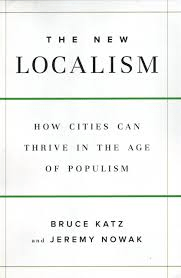
The New Localism
Book Review As politics has become nationalized in recent years, problem solving has become localized, a trend termed new localism. New localism is governance founded on collaboration, not coercion; diverse networks, not just elected officials; and iterative problem solving, not rigid and prescriptive approaches. Cities (the local level) are an ideal test bed for new…
Written by
·
-

Bureau Men Settlement Women: Constructing Public Administration in the Progressive Era
Book Review Today’s field of public administration is shaped largely by the events that transpired during the progressive era, a time when social justice and improving the lives of city dwellers began. This was also the era when rationalizing and regulating societal processes took hold. The field of public administration began as the former and…
Written by
·
-
Integrating Equity in Urban Planning
I spent yesterday morning on the 16th floor of the U.S. Bank Building in downtown Saint Paul among a crowd of mostly government planners like myself. We were all there with the hopes to discover the secret to how we can better integrate equity into our comprehensive plans. While hopeful it would be handed to…
Written by
·
-
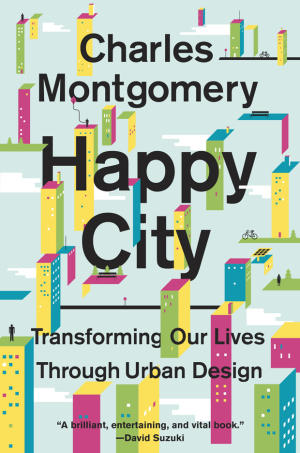
Happy City
Book Review Happy City does not introduce a radical new concept for shaping cities. As the author, Charles Montgomery, points out, Athenians strove for pure happiness as far back as the fifth century A.D. They coined the state of achievement, eudaimonia. Centuries later, in 1943, Abraham Maslow categorized five levels of human needs. The most basic…
Written by
·
 The Planning Lady